

The Innovation Age
Leading the companies that will build our future
Why has innovation declined for the last 50 years?
Rates of disruptive innovation have been in decline across every discipline
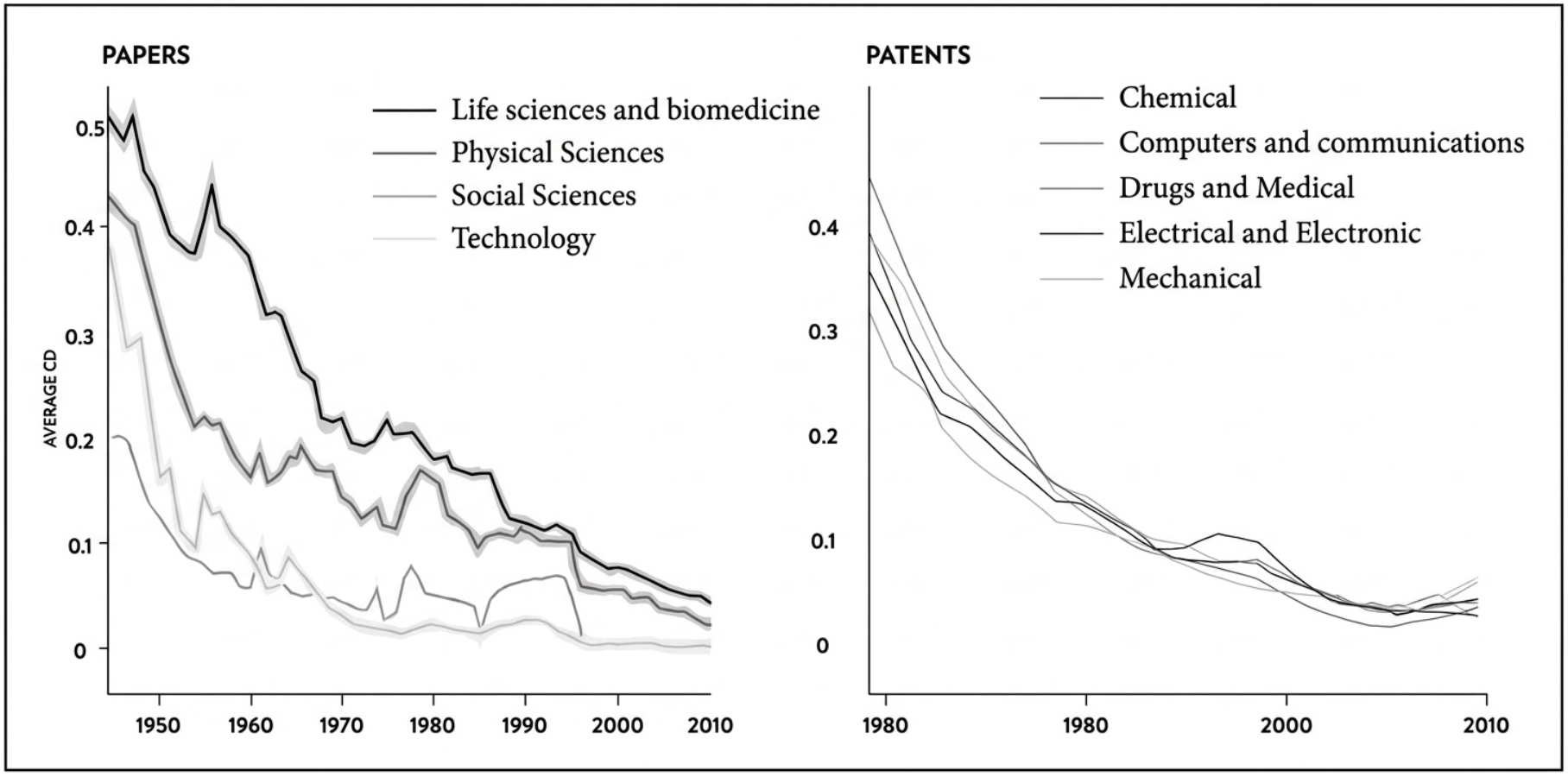
The Machine Age or the Innovation Age?
Innovation has declined because there is a deep and ultimately unresolvable tension between being creative and being efficient. The social, political, and economic structures required for any system to do one necessarily compromises its ability to do the other. Optimising for efficiency reduces innovation, and optimising for innovation reduces efficiency. The engineer has to think differently to the artist. Every society, therefore, must make a choice. It must ask itself whether its future prosperity depends on being more efficient or on being more innovative. Do we need to focus more resources on solving our current problems, or on making our existing solutions more affordable? And, once this fundamental question has been answered, we must then reconfigure our whole system: our laws, our regulations, and our companies, to deliver this goal.
The last time a public consensus formed around this critical question was over one hundred years ago, with the arrival of mass production and the birth of The Machine Age. That society opted for greater efficiency. They voted for Henry Ford’s cheaper cars, even though they only came in black. Today, our companies and markets remain configured to drive efficiency, even though our world has fundamentally changed. Fifty years of declining innovation shows us that our future prosperity depends on us becoming more innovative, even though this will also make us less efficient.